A Brief History of Spinning: How Yarn Has Been Made for Millennia
From hand spindles to mechanical mills, the craft that clothed humanity

Hand Spinning Tradition
Ancient fiber craft that predates written history
Alternatives at a glance
Modern Drop Spindle
Portable hand tool for traditional fiber spinning techniques
Spinning Wheel
Mechanical device that increased yarn production speed
Electric Spinner
Contemporary tool combining traditional craft with modern power
Industrial Mill Yarn
Factory-produced fiber for accessible modern crafting
Evolution of Spinning Methods

Drop Spindle
Oldest known toolUsed since 8000 BCE across all cultures
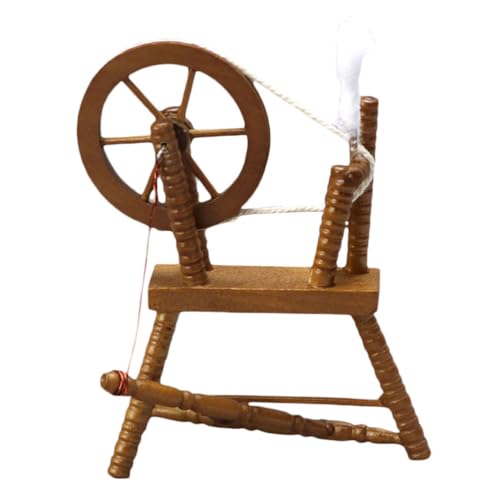
Spinning Wheel
Medieval innovationRevolutionized European textile production
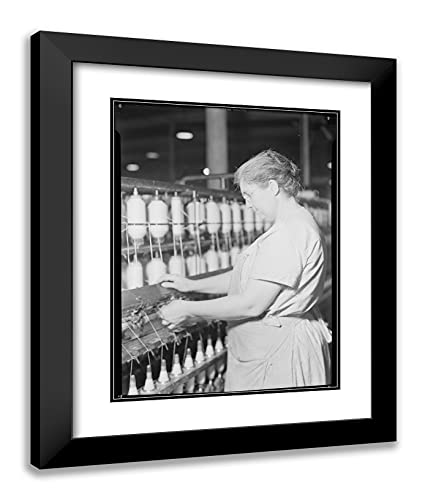
Industrial Spinner
Modern standardPowers today’s yarn industry
The Origins of Yarn: Stone Age Innovation
Humans have been spinning fibers into yarn for at least 10,000 years.
Archaeological evidence from Neolithic settlements reveals spindle whorls carved from stone and bone, suggesting that fiber craft developed alongside agriculture and animal domestication.
Early spinners worked with materials available in their environment: plant fibers like flax and nettle in temperate regions, cotton in warmer climates, and animal fibers from sheep, goats, and camelids.
The drop spindle remained the dominant tool for millennia because it required no infrastructure—a wooden shaft and weighted whorl could be crafted from local materials and carried anywhere.
This portability meant spinning became deeply embedded in daily life, performed while tending animals, walking between tasks, or socializing.

From Distaff to Wheel: Medieval Acceleration
The spinning wheel appeared in India around 500-1000 CE and reached Europe by the 13th century.
This mechanical innovation increased production speed dramatically—a skilled wheel spinner could produce three to five times more yarn per hour than a drop-spindle spinner.
Early wheels used a hand-driven or treadle mechanism to rotate a spindle continuously, while the spinner controlled fiber drafting with both hands.
The great wheel (also called walking wheel) required the spinner to step back and forth, drawing out fiber as the large wheel turned.
Flyer wheels, developed in the 16th century, allowed simultaneous twisting and winding, further increasing efficiency and making spinning a seated activity.
Regional Variations and Material Specialization
Different cultures developed spinning techniques suited to local fibers.
European spinners specialized in wool and flax, creating distinct wheel designs for each fiber’s unique properties—wool required more twist, flax needed careful moisture control.
Asian spinners mastered silk and cotton on smaller, faster wheels optimized for fine-gauge thread.
Andean cultures developed supported spindles for alpaca and llama fibers, using a bowl or dish to stabilize the spindle during drafting.
These regional innovations demonstrate how spinning technology adapted to available resources rather than following a single evolutionary path.
Key Spinning Milestones
The Industrial Revolution: From Cottage to Factory
Textile production transformed completely between 1760 and 1840.
The spinning jenny allowed one operator to manage eight spindles simultaneously, then later versions handled 80 or more.
Richard Arkwright’s water frame (1769) used water power to drive rollers that drafted fiber mechanically, producing stronger yarn suitable for warp threads.
Samuel Crompton’s spinning mule combined the best features of both earlier inventions, creating fine, strong yarn at unprecedented speed.
By 1830, mechanized mills had largely replaced home spinning in industrialized nations, shifting yarn production from cottage craft to factory labor.

Contemporary Spinning: Craft Revival and Industrial Scale
Modern yarn production operates at two distinct scales: industrial mills and hand-spinning craft.
Commercial mills use ring spinning, open-end (rotor) spinning, and air-jet systems to produce billions of pounds of yarn annually for global textile markets.
Big Twist Yarn manufactures acrylic and wool-blend yarns using industrial processes that ensure consistent gauge, dye uptake, and tensile strength—qualities hand spinners achieve through years of practice but factories replicate mechanically.
Parallel to industrial production, hand spinning experienced a renaissance starting in the 1970s as crafters sought connection to textile heritage and control over fiber selection.
Modern spinners choose from hand-crafted tools made by specialized manufacturers like Ashford Wheels, Schacht Spindle Co., and Louet, companies that build spinning wheels and accessories using traditional woodworking techniques combined with contemporary engineering.
Why Modern Crafters Explore Both Methods
Many fiber enthusiasts maintain a foot in both worlds—purchasing mill-spun yarn for most projects while hand-spinning specialty fibers for unique pieces.
Hand spinning offers creative control over fiber blends, twist direction, and gauge variations impossible to specify in commercial yarn.
Patterns designed for Big Twist yarns benefit from the consistency that industrial spinning provides, making gauge swatches predictable and finished dimensions reliable.
Projects using Big Twist Posh or Big Twist Living lines rely on uniform twist and ply construction that would require meticulous attention to replicate by hand.
Conversely, spinners working with Big Twist Plush appreciate how the chenille-style texture mimics effects achievable through specialized hand-spinning techniques like core-spinning or boucle construction.
Hand Spinning: Craft Tradition in Modern Context
Why Spinners Continue Ancient Methods
- Complete creative control over fiber selection, blend ratios, and twist characteristics
- Meditative, portable craft requiring minimal equipment investment
- Direct connection to textile heritage spanning 10,000 years of human culture
- Ability to process raw fleece and non-commercial fibers unavailable as mill-spun yarn
- Community built around regional fiber festivals, spinning guilds, and fleece exchanges
Practical Limitations to Consider
- Time-intensive process—a skein requiring 30 minutes to knit may take 3-5 hours to spin
- Significant skill development required for consistent gauge and balanced twist
- Limited color range unless spinner also learns dyeing techniques
- Hand-spun yarn costs substantially more per yard when accounting for labor hours
- Challenges scaling production for large projects like blankets or multi-garment wardrobes
Choosing Your Spinning Path
Hand Spinning Suits You If
You value process over speed, enjoy working with raw or unusual fibers, want complete creative control over yarn characteristics, and find satisfaction in mastering traditional craft skills. Ideal for makers who view spinning as meditation rather than means to an end.
Mill-Spun Yarn Suits You If
You prioritize project completion over process exploration, need consistent gauge for pattern matching, work with standardized color palettes, or produce multiple garments annually. Big Twist crochet patterns exemplify projects where mill-spun consistency is essential for achieving published dimensions.
Hybrid Approach Suits You If
You hand-spin art yarn for specialty shawls and accent pieces while using commercial yarn for everyday garments, or you spin luxury fibers by hand but rely on mill-spun basics for large-scale projects. Many experienced fiber artists maintain both skill sets, selecting the appropriate method per project.
The Physics of Twist: What All Spinners Share
Regardless of method, all spinning obeys the same physical principles.
Yarn forms when twist energy travels down a drafted fiber supply, causing individual fibers to wrap around each other and lock into a cohesive strand.
The amount of twist determines yarn characteristics—high-twist yarn produces strong, durable fabric with crisp stitch definition, while low-twist yarn creates soft, drapey fabric prone to pilling.
Traditional spinners controlled twist by adjusting spindle weight, wheel ratio, or treadle speed.
Modern industrial spinners achieve the same control through motorized spindle RPM and precisely calibrated roller speeds.
This continuity of principle across 10,000 years demonstrates that spinning remains fundamentally the same craft whether performed with a Stone Age drop spindle or a contemporary ring-frame mill.
The oldest known textile fragments, discovered in Çatalhöyük (modern Turkey) and dated to approximately 7000 BCE, show sophisticated spinning technique including plied yarns—evidence that ancient spinners had already mastered complex fiber engineering millennia before writing systems developed.
Cultural Significance: Spinning as Social and Economic Force
Spinning shaped more than just textile production—it influenced social structures, gender roles, and economic systems for thousands of years.
In pre-industrial Europe, unmarried women were called spinsters because spinning provided one of few income sources available to single women.
The terms “distaff side” (maternal lineage) and “spinning a yarn” (telling a story) derive from the cultural centrality of fiber work.
Colonial American households devoted enormous labor hours to spinning—a typical family needed 400-600 hours of spinning annually to produce enough yarn for clothing and linens.
Gandhi’s promotion of the charkha (portable spinning wheel) in the 1920s-30s transformed spinning into a political act, symbolizing Indian economic independence from British textile imports.
The spinning wheel became a symbol of female virtue, economic independence, and national identity across cultures—few tools have carried such symbolic weight while remaining fundamentally unchanged for centuries.
Textile History Academic Perspective
Contemporary Hand Spinning: Tools and Techniques
Modern hand spinners benefit from refined tools that ancient spinners would recognize in function but marvel at in craftsmanship.
Drop spindles now feature precision-machined brass whorls and exotic hardwoods, but operate identically to Neolithic bone-and-stone versions.
Spinning wheels from manufacturers like Ashford Wheels incorporate ball bearings, adjustable tension systems, and multiple drive ratios while preserving traditional wheel-and-flyer architecture.
Schacht Spindle Co. produces wheels with interchangeable flyer assemblies, allowing spinners to switch between fine laceweight and bulky art yarn on the same frame.
Louet wheels feature innovative tensioning mechanisms that maintain consistent take-up across long spinning sessions, addressing a challenge that has frustrated spinners since the medieval period.
These refinements make spinning more ergonomic and efficient without fundamentally altering the craft’s essential character.

Industrial Spinning: How Mill-Spun Yarn Is Made in 2026
Commercial yarn production follows a multi-stage process refined over 200 years of industrial textile manufacturing.
Raw fiber arrives at mills in compressed bales—cotton from agricultural suppliers, wool from sheep ranches, or synthetic staple from petrochemical plants.
Opening and cleaning machines separate and fluff the fiber, removing vegetable matter and short fibers that would create weak spots.
Carding machines align fibers into a loose web called a sliver, organizing them parallel to each other for efficient drafting.
Drawing frames merge multiple slivers and draft them thinner, repeating this process several times to blend fibers thoroughly and even out thickness variations.
The final spinning stage—typically ring spinning for natural fibers—inserts twist while winding yarn onto bobbins at speeds of 15,000-20,000 RPM.
Plying machines combine multiple single strands, adding a secondary twist in the opposite direction for balanced yarn that resists biasing.
The result: Big Twist Yarn skeins with tension and twist values within 2-3% variance, the consistency that patterns depend on for accurate gauge predictions.
Material Science: Natural vs Synthetic Fiber Spinning
Spinning technique varies significantly based on fiber type.
Wool fibers have natural crimp and scales that lock together easily with moderate twist—ideal for both hand and machine spinning.
Cotton requires higher twist counts because its short staple length demands more rotations per inch to achieve equivalent strength.
Synthetic fibers like acrylic come in precisely cut staple lengths, allowing mills to control yarn characteristics by varying fiber diameter and cut length during extrusion.
Blended yarns combine natural fiber properties (breathability, warmth) with synthetic advantages (washability, cost), requiring careful attention to differential shrinkage during processing.
Big Twist Yarn’s acrylic lines use staple fibers engineered to mimic wool’s handle while offering superior colorfastness and machine-wash durability—a trade-off hand spinners working with raw fleece cannot replicate.
Common Questions About Spinning History and Techniques
A skilled drop-spindle spinner could produce 100-200 yards of worsted-weight yarn per day (8-10 hours of work). The spinning wheel, introduced in medieval Europe, increased output to 300-1000 yards per day depending on wheel type and spinner skill level. Modern ring-spinning mills produce over 50 miles of yarn per spindle per day.
The spinning wheel originated in India between 500-1000 CE and traveled slowly along trade routes through the Middle East. It reached Europe by the 13th century. The delay reflects limited technology transfer between distant regions and the conservatism of established cottage industries—European spinners had perfected drop-spindle techniques over millennia and saw little immediate incentive to adopt unfamiliar tools.
Highly skilled hand spinners can produce yarn with consistent gauge, balanced twist, and controlled texture that matches or exceeds commercial yarn in specific characteristics. However, they cannot match industrial consistency across hundreds of yards, nor can they economically produce the volumes required for most knitting and crochet projects. Hand spinning excels at creating unique art yarns and processing specialty fibers unavailable commercially.
The spinning jenny and subsequent industrial spinning frames largely eliminated professional hand spinning as an occupation in Europe and North America by the mid-1800s. Many former spinners transitioned to factory work operating mechanical frames. Hand spinning survived as a domestic skill in rural areas and experienced revival as a hobby craft beginning in the 1970s.
Yes—Andean communities continue drop-spindle spinning techniques passed down for centuries, Navajo spinners maintain traditional upright spindle methods, and Shetland islanders preserve distinctive wool-spinning traditions. These regional techniques survive because they’re embedded in cultural identity and adapted to local fiber types. Contemporary hand spinners worldwide study and adopt these diverse methods.
Spinning’s Unbroken Thread Through Human History
Yarn spinning stands as one of humanity’s oldest continuously practiced crafts.
From Neolithic bone whorls to contemporary industrial mills, the fundamental act of twisting fiber into thread has remained recognizable across 10,000 years.
Modern crafters inherit this legacy whether they purchase mill-spun skeins or learn to draft fiber on a hand spindle—both approaches connect to the same ancient innovation that allowed humans to create fabric from fleece.
The choice between hand spinning and mill-spun yarn isn’t about authenticity or superiority—it’s about selecting the appropriate tool for your creative goals, time availability, and project requirements.
Big Twist Yarn’s industrial consistency serves different needs than hand-spun art yarn, just as medieval wheel-spun thread served different markets than luxury hand-spun silk.
Understanding spinning’s history enriches every fiber project, whether you’re working through a pattern or drafting your own yarn—you’re participating in a craft that predates agriculture, writing, and metalworking, yet remains vibrantly alive in 2026.